

Regulating of digital hate: between freedom of expression and the protection of vulnerable groups in Chile
Article Sidebar
Main Article Content
Abstract
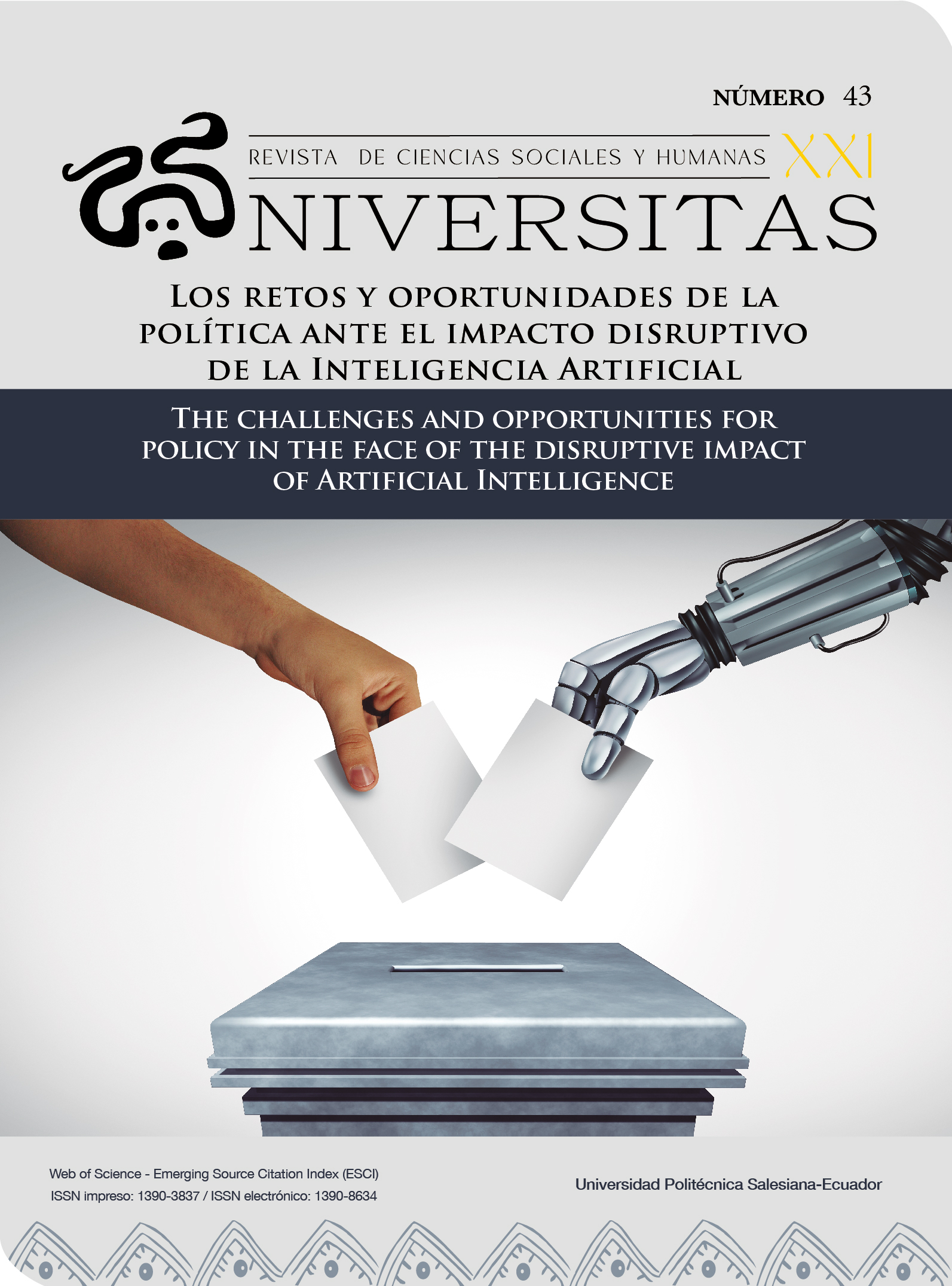
The expansion of artificial intelligence (AI) in political communication has transformed the ways in which political actors interact with citizens, enabling the automated generation of personalized messages and the massive dissemination of information through digital networks. This dynamic has contributed to the spread of fake news and polarizing content, weakening public debate and fostering the reproduction of hate speech, particularly against historically vulnerable groups such as migrants, women, and sexual minorities. Cases such as Cambridge Analytica reveal how the intensive use of personal data can manipulate political preferences, while inter-American jurisprudence —as in Azul Rojas Marín v. Peru— has begun to link hate speech with structural prejudice-based violence. In this context, it is increasingly urgent to reconsider the role of law in addressing expressions that, under the guise of free speech, perpetuate exclusion and discrimination. This article analyzes the issue from a comparative legal perspective, examining regulatory frameworks such as those of Germany and Spain, and assessing the regulatory gaps within the Chilean legal system. It concludes that an effective response requires clear and proportionate regulation aimed at protecting fundamental rights without resorting to censorship. The study proposes normative criteria for legitimate state intervention that combines reasonable sanctions with preventive and educational measures, thereby strengthening democratic deliberation.
Article Details
Universitas-XXI Journal aligns with the principles of open access and academic collaboration by adopting the Creative Commons Attribution-NonCommercial-ShareAlike 4.0 International License (CC BY-NC-SA 4.0). This license ensures that published content can be used and shared widely under the following conditions:
Attribution: Authors and the journal must be appropriately credited as the original creators of the content, with full reference and a link to the publication provided.
Non-commercial use: Content may not be used for commercial purposes, preserving its academic and educational intent.
ShareAlike: Derivative works must be distributed under the same terms as this license, promoting the creation of accessible and equitable knowledge.
By implementing this license, the Universitas-XXI Journal strengthens its commitment to disseminating high-quality research, providing free access to knowledge, and fostering a collaborative environment among researchers, educators, and students worldwide.
This decision reflects core values of responsibility, ethics, and transparency in academia, ensuring that intellectual contributions serve as a foundation for new research and projects while respecting the rights of authors and the scientific community.
For more information about this license, please visit the following link: https://creativecommons.org/licenses/by-nc-sa/4.0/"
References
Ábrego Molina, V. H. y Flores Mérida, A. (2021). Datificación crítica: práctica y producción de conocimiento a contracorriente de la gubernamentalidad algorítmica. Dos ejemplos en el caso mexicano. Revista Administración Pública y Sociedad, (11), 211-229. https://acortar.link/1ykPo9
Abramovich, V. (2021). El límite democrático de las expresiones de odio. En V. Abramovich, M. J. Guembe y M. Capurro Robles (coords.), El límite democrático de las expresiones de odio (pp. 17-57). Tesseo y Universidad Nacional de Lanús.
Alkiviadou, N. (2023). Artificial intelligence and online hate speech moderation. Sur International Journal on Human Rights, 32, 105-117. https://acortar.link/1ykPo9
Almonacid-Díaz, C. (2022). Ética y actividad política. Discursos de odio, negacionismo y desinformación en la Convención Constitucional de Chile. Revista Palabra y Razón, (22), 60-62. https://doi.org/10.29035/pyr.22.56
Álvarez Bujan, M. V. A. (2023). Inteligencia artificial y medidas cautelares en el proceso penal: tutela judicial efectiva y autodeterminación informativa en potencial riesgo. Revista Española de Derecho Constitucional, 127, 177-207. https://doi.org/10.18042/cepc/redc.127.06
Alastuey Dobón, C. (2024). El Derecho penal ante el negacionismo. Comentario a la SAP de Barcelona de 9 de septiembre de 2024 (Caso de la Librería Europa III). Revista de Derecho Penal y Criminología, (32), 483-519. https://acortar.link/1ykPo9
Amaya López, C. y Cueva Gaibor, D. (2025). Inteligencia artificial y comunicación política en campañas electorales: mirada crítica, implicaciones y desafíos. Revista Social Fronteriza, 5(2), e687. https://doi.org/10.59814/resofro.2025.5(2)687
Astudillo Muñoz, J. L. (2023). Notas sobre la posverdad, los discursos de odio y la regresión de lo democrático. Revista de Filosofía Jurídica, Social y Política, (19), 401-427. https://acortar.link/1ykPo9
Boletín N.º 11.949-17. (2019). Modifica el Código Penal, y las leyes N.º 20.393 y 20.609, para sancionar el negacionismo respecto de las violaciones a los derechos humanos cometidas en Chile, y la incitación a la violencia y a la discriminación contra personas o grupos de personas. Congreso Nacional de Chile.
Bonilla Gutiérrez, J. C. (2022). La inteligencia artificial y la protección de la privacidad: un reto constitucional en el siglo XXI. En L. Peña, Inteligencia Artificial, Derecho y Sociedad (pp. 279-291). Revista de la Facultad de Derecho de México. Tomo LXXIV, 290, septiembre-diciembre 2024. https://doi.org/10.22201/fder.24488933e.2024.290.89719
Castillo Morales, J. P. (2019). Metodología y comparación jurídica en el Derecho penal. La incidencia del Derecho comparado en la estructura de la dogmática jurídico-penal. Revista de Derecho, (246), 13-47. http://dx.doi.org/10.4067/S0718-591X2019000200013
Comité de Ministros del Consejo de Europa. (2022). Recomendación CM/Rec (2022)16 del Comité de Ministros a los Estados miembros sobre la lucha contra el discurso de odio. Consejo de Europa.
Convención sobre la Eliminación de Todas las Formas de Discriminación contra la Mujer. (1979).
Corte Interamericana de Derechos Humanos. (2020). Caso Azul Rojas Marín y otra Vs. Perú. Sentencia de 12 de marzo de 2020.
Echiburú, G. G., Vargas, C. B. y Letelier, G. M. (2019). Análisis Crítico del Discurso: posicionamiento valorativo y discurso de odio en la discusión parlamentaria sobre la Ley de identidad de género. Revista Latinoamericana de Estudios del Discurso, 19(2), 71-92. https://acortar.link/1ykPo9
Fuentes Osorio, M. (2022). Hateful speech, vulnerabilidad y judicialización: los límites del derecho penal frente a los discursos de odio. Quaderns de Dret, (89), 1-17. https://doi.org/10.34617/ATPS-JJ84
García-García, J. (2025). Respuestas normativas para enfrentar el discurso del odio desde la experiencia europea [Regulatory responses to address hate speech from the European experience]. European Public & Social Innovation Review,10, 01-12. https://doi.org/10.31637/epsir-2025-1904
González Ruiz, M. J. (2023). Evaluación de la regulación de los delitos de odio en el sistema penal chileno [Tesis de grado, Universidad de Chile]. Repositorio Académico. https://acortar.link/1ykPo9
G'sell, F. Digital Authoritarianism: from state control to algorithmic despotism (January 30, 2025). http://dx.doi.org/10.2139/ssrn.5117399
Jacoby, A. X. (2020). Más que palabras: libertad de expresión y discurso de odio en el Sistema Interamericano de Derechos Humanos. Eunomía. Revista en Cultura de la Legalidad, 18, 148-163. https://doi.org/10.20318/eunomia.2020.5268
Instituto Nacional de Derechos Humanos. (2014). Informe sobre el Proyecto de Ley que tipifica el delito de incitación al odio racial y religioso (Boletín N.º 7130-07). Santiago de Chile. pp. 9-11.
Kaufman, G. (2015). Odium dicta. Libertad de expresión y protección de grupos discriminados en internet. México. D.F.: Consejo nacional para prevenir la discriminación. https://acortar.link/1ykPo9
Lafont, C. (2025). La democracia deliberativa tras la transformación digital de la esfera pública. Revista Latinoamericana sobre Democracia, (0), 20-29. https://doi.org/10.22201/iis.rld.2025.00.4
Matamoros-Fernández, A. y Farkas, J. (2021). Racism, hate speech, and social media: A systematic review. First Monday, 26(2). https://acortar.link/1ykPo9
Mota, C. (2023). Inteligencia artificial y comunicación política: desafíos democráticos en la era algorítmica. Fundación Friedrich Ebert – Observatorio de Medios y Plataformas. https://acortar.link/1ykPo9
Nazmine, N., Tareen, M. K. y Noreen, S. (2021). Hate speech and social media: A systematic review. International Journal of Innovation, Creativity and Change, 15(8), 5285-5294.
Paúl Díaz, Á. (2011). La penalización de la incitación al odio a la luz de la jurisprudencia comparada. Revista chilena de derecho, 38(3), 573-609. https://dx.doi.org/10.4067/S0718-34372011000300007
Pereznieto Castro, L. (2020). La dogmática jurídica, con especial referencia al derecho internacional privado. Universidad Nacional Autónoma de México, Instituto de Investigaciones Jurídicas. https://revistas.juridicas.unam.mx
Prabhu, R. y Seethalakshmi, V. (2025). A comprehensive framework for multi-modal hate speech detection in social media using deep learning. Scientific Reports, 15, 13020. https://doi.org/10.1038/s41598-025-94069-z
Relatoría Especial para la Libertad de Expresión CIDH-OEA (RELE-OEA), Marco Jurídico Interamericano sobre el derecho a la libertad de expresión, 2009.
Rodríguez Zepeda, J. (2018) El peso de las palabras: libre expresión, no discriminación y discursos de odio. El prejuicio y la palabra, 27. https://acortar.link/1ykPo9v
Rubio, R., Alvin, F. F. y Andrade, V. (2024). Inteligencia artificial y campañas electorales. Disfunciones informativas y amenazas sistémicas de la nueva Comunicación política. Centro de Estudios Políticos y Constitucionales.
Sánchez Sánchez, A. M., Ruiz-Muñoz, D. y Sánchez Sánchez, F. J. (2023). Research trends in the control of hate speech on social media for the 2016-2022 time frame. Cuadernos.info, (56), 89-112. http://dx.doi.org/10.7764/cdi.55.60093
Sarasqueta, G., Ferrero, M., Olmedo, S., Rojas Montiel, E. R., Castillo Peñaherrera, C., Martínez Rodríguez, R. Maíz de Sotomayor, N., Salinas Goytia, J. R. y Ames Tineo de Saavedra, A. C. (2025). La construcción de narrativas políticas en campañas electorales sudamericanas: un análisis de las redes sociales [The construction of political narratives in South American electoral campaigns: a social media analysis]. Revista Latina de Comunicación Social, 83,1-22. https://www.doi.org/10.4185/RLCS-2025-2442
Serra Cristóbal, R. (2023). Fake news y el derecho a recibir información veraz: entre la libertad de expresión y la desinformación en la era digital. Revista de Derecho Político 116, enero-abril, 13-46. https://doi.org/10.5944/rdp.116.2023.37147
Sibrian, N., Alfaro, A. y Núñez, J. C. (2024). Validación de instrumento sobre exposición a discursos de odio de comunidades migrantes en el ecosistema mediático chileno: resultados preliminares [Validation of an instrument on exposure of migrant communities to hate speech in the Chilean media ecosystem: preliminary results]. Revista Latina de Comunicación Social, 82, 01-23.
https://www.doi.org/10.4185/RLCS-2024-2226
Sibrian, N. y Labrador, M. J. (2024). Desinformación y marcos regulatorios en América Latina: desafíos en torno a discursos de odio, eliminación masiva de datos y derecho al olvido. Democracia y desinformación. Nuevas formas de polarización, discursos de odio y campañas en redes. Respuestas regulatorias de Europa y América Latina, 139-162. https://acortar.link/1ykPo9 v
Sosa Huapaya, A. (2024). Conflictos entre la autodeterminación informativa y la segmentación de perfiles a través de la publicidad programática online en el Perú. Derecho & Sociedad, (63), 285-298. https://doi.org/10.18800/dys.202402.019
Tapia Ballesteros, P. (2021). El discurso de odio del art. 510.1.a) del Código Penal español: la ideología como un Caballo de Troya entre las circunstancias sospechosas de discriminación. Política Criminal, 16(31), 284-320. https://acortar.link/1ykPo9
Valdés, L. y Spigno, J. (2021). Libertad de expresión y derecho penal: el caso de los discursos de odio. ISBN 9788411130196, pp. 35-52.
Valdez Zepeda, A., Aréchiga, D. y Daza Marco, T. (2024). Inteligencia artificial y su uso en las campañas electorales en sistemas democráticos. Revista Venezolana de Gerencia, 29(105), 63-76. https://doi.org/10.52080/rvgluz.29.105.5